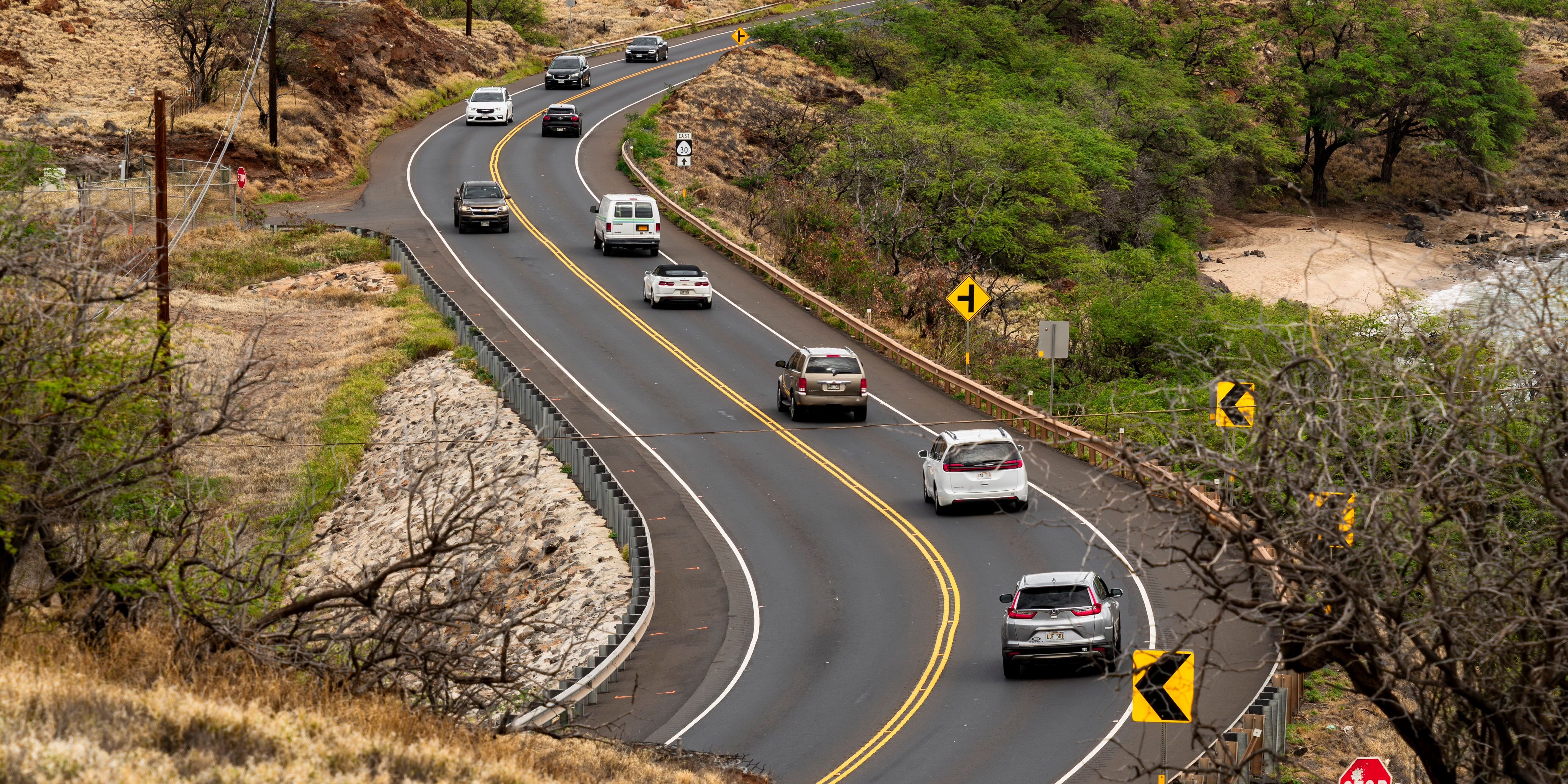
Saddle Road, also called the Daniel K. Inouye Highway or Route 200, connects Hilo and Kailua-Kona across the middle of the Big Island. It climbs above 6,000 feet, and the weather and long open stretches can turn a normal drive into a dangerous one. A head-on collision here can leave you badly hurt in a remote spot, far from help. If another driver caused your crash, you may be able to sue and recover money for your losses.
Why Head-On Crashes Happen on Saddle Road
Saddle Road runs about 53 miles. Fog can roll in fast above 5,000 feet, and rain can cut visibility in seconds. A driver at highway speed may have almost no time to react when an oncoming car appears out of the mist.
The layout adds to the risk. Long straight sections tempt people to speed, and then a curve shows up. A driver carrying too much speed into a turn can drift over the center line. Others pass where it is not allowed because they are stuck behind a slow truck. Drivers pulling in from access roads near Mauna Kea can also misjudge how far away oncoming cars are.
Mixed traffic makes things harder. Large military vehicles tied to the Pohakuloa Training Area share the two-lane sections with everyone else. Hawaii also welcomed nearly 9.7 million visitors in 2025, and many rent cars to drive between Hilo and Kona. A driver who has never seen this road may not expect the fog, the elevation changes, or the curves.
Parts of Saddle Road With Known Safety Concerns
In May 2026, Hawaii County Mayor Kimo Alameda pointed to mile markers 13 through 16 and 44 through 47 as areas of concern. In June 2026, the Hawaii Department of Transportation declared a traffic emergency zone between mile markers 5.5 and 28 after several deadly crashes. The state has proposed rumble strips, curve warning signs, high-friction pavement, and wet-weather striping.
Help can also take longer to reach the remote middle of the highway than it would near Hilo or Kona.
Your Right to Sue After a Saddle Road Head-On Collision
Yes, you can sue if another driver’s carelessness caused the crash. Hawaii Revised Statutes §663-1 holds people responsible for injuries caused by their negligent acts. The hard part is proving it.
Proving the Other Driver Was Negligent
You must show the other driver failed to use reasonable care. In head-on cases, that often looks like one of these:
- Crossing the center line
- Passing where passing is not allowed
- Driving too fast for the fog, rain, or curves
- Texting or other distracted driving
- Driving under the influence of drugs or alcohol
- Using a vehicle with defective equipment
Hawaii’s right-of-way rules matter too. Drivers must stay on their side of the road and pass only when it is clear and legal. A driver turning left must yield to oncoming traffic that is already in the intersection or close enough to be a hazard. If you can show the other driver broke one of these rules, your claim gets stronger.
Where to File and the Two-Year Deadline
Lawsuits from Hawaii County crashes can be filed at the Third Circuit Court at Hale Kaulike, 777 Kilauea Avenue in Hilo, or at the Keahuolu Courthouse in Kailua-Kona. Hawaii gives you two years to file under HRS §657-7. The clock runs from the crash date or the date you discovered the injury, so do not wait.
How Hawaii’s No-Fault and Fault Rules Affect Your Claim
Two rules shape what you can collect after a Saddle Road crash. One is no-fault insurance. The other is modified comparative negligence.
PIP Coverage Pays First
Hawaii is a no-fault state for car injuries, and every car owner must carry at least $10,000 per person in Personal Injury Protection, or PIP, under HRS §431:10C-103.5. After a crash, you file with your own insurer first, no matter who caused it. PIP pays medical and rehab costs. It pays lost wages only if you bought optional wage-loss coverage. Vehicle damage is handled separately through the at-fault driver’s coverage.
When You Can Claim Against the At-Fault Driver
No-fault does not mean nobody is to blame. Under HRS §431:10C-306, you can step outside the no-fault system and bring a claim against the at-fault driver if the crash causes one of these:
- A death
- A significant permanent loss of use of a body part or function
- A permanent and serious disfigurement
- PIP-covered medical costs that reach $5,000
That claim can cover general damages and other losses PIP does not pay. If you later recover money for costs PIP already paid, your insurer can take back half of those benefits.
Shared Fault and the 50 Percent Rule
Under HRS §663-31, you can recover damages if your share of fault is 50 percent or less. The court lowers your award by your percentage. If a court awards $100,000 and finds you 20 percent at fault, you receive $80,000. If you are found 51 percent or more at fault, you recover nothing. Insurance companies know this and may try to shift blame onto you, so strong evidence matters.
Evidence That Can Prove Fault After a Head-On Crash
Traffic cameras can help, but coverage is limited. Oahu has the most live-view cameras, and the neighbor islands have far fewer. Because Saddle Road is so remote, you will likely need other sources:
- Dashcams in your car or in other cars
- Security cameras at nearby businesses
- Photos of the vehicles, skid marks, road signs, and weather
- Names and phone numbers of witnesses
- The police report
Many cameras record over old footage on a loop, so ask for it to be saved right away. A lawyer can send that request for you.
Medical Care After a Saddle Road Crash
Hilo Benioff Medical Center, at 1190 Waianuenue Avenue in Hilo, serves East Hawaii. It is a Level III Trauma Center with about 50,000 emergency visits each year. Kona Community Hospital, at 79-1019 Haukapila Street in Kealakekua, serves West Hawaii and is also a Level III Trauma Center. Transport from mid-island can take a long time.
People with severe brain or spinal injuries may need a flight to The Queen’s Medical Center in Honolulu. Flights, hospital stays, and ongoing care can pass the $10,000 PIP limit quickly.
Special Situations: Government, Military, and Tourist Drivers
If poor road upkeep or missing warning signs played a part, the county or state may share the blame. Claims against a government body have their own notice rules. Claims against military drivers or vehicles follow federal procedures. And if the other driver was a visitor who flew home, your claim does not go away.
Frequently Asked Questions
How long will it take for help to reach me after a crash on Saddle Road?
It depends on where you are. The middle of the highway, near mile markers 13 through 47, is the most remote, and emergency crews may take much longer to arrive than they would in Hilo or Kona.
Can I still sue if fog played a part in the crash?
Yes. Drivers must slow down for the conditions. A driver who goes too fast in fog can still be negligent. If missing signs or road problems added to the danger, a government body may share fault.
Can I sue if the other driver was in a military vehicle?
You may be able to. These claims often follow federal rules, so talk to a lawyer who knows both Hawaii and federal law.
Do I have to report a head-on crash on Saddle Road to the police?
Yes. Hawaii law requires drivers to report crashes that involve injury, death, or major property damage. Any injury crash on Saddle Road should be reported to the Hawaii County Police.
Contact Foster Law Offices Today
A head-on collision on Saddle Road can change your life in seconds. You should not have to sort out insurance, evidence, and deadlines on your own while you heal. Foster Law Offices can review what happened, explain your options, and deal with the insurance companies for you. Call 808-341-6293 for a free consultation to talk about your case.